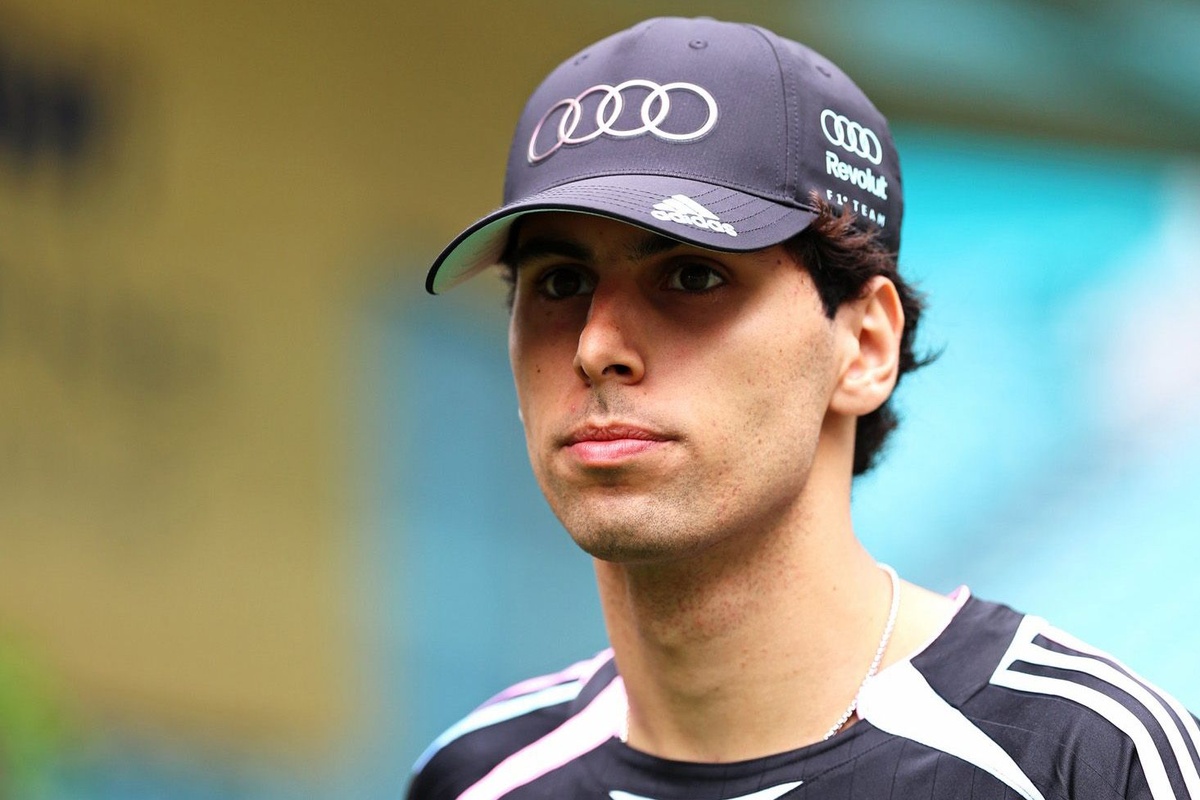
In his second season as a full-time starter in Formula 1, Gabriel Bortoleto is starting to sound less like a “rising kid” and more like a driver who understands the job description. According to the latest coverage from Jogo Hoje, the key isn’t that he’s suddenly softer or smarter in the abstract. It’s that he’s clearer about what matters when the lights go out and the grid da Fórmula 1 turns into a tactical chessboard.
And yes, the headline quote is straight to the point: Bortoleto said he believes everyone shows respeito na pista, even when things get physical and the lap-by-lap margin collapses. That’s not a motivational poster. That’s racecraft.
What Bortoleto said on the Pitstop podcast
Speaking on the Pitstop podcast, Bortoleto addressed the reality of modern F1: the sport is built on speed, but it’s policed by behavior. He said that within the current grid da Fórmula 1, drivers can fight no limite and still keep things clean enough to race again tomorrow.
The question then turned personal, because Bortoleto has history with Oliver Bearman. They’re not just rivals; they’ve crossed paths in the junior ladder, and Bearman is now a full-time F1 presence with Haas. When asked whether he’d still “go out for dinner” if they ever collided on track, Bortoleto’s answer was measured: the same day, no. But he made the larger point that racing incidents are part of the work.
His logic was sharp and, frankly, grown-up. He said that if an error happens, it won’t be treated as malice. “We need to separate professional life and personal life.” That’s the kind of mindset that prevents grudges from bleeding into the next corner and turning a hard disputa no limite into a petty feud.
The Bearman friendship and the line between track and life
Here’s the tactical nuance: friendship doesn’t eliminate competition; it just changes how you interpret mistakes. Bortoleto basically drew a boundary between intent and consequence. In his view, if he and Bearman are both pushing, then contact becomes possible, not planned.
That distinction matters because F1 doesn’t forgive emotional driving. One twitch, one late brake marker, one over-ambitious lunge, and suddenly you’re not “fighting for position,” you’re gambling with your points haul.
So when Bortoleto says he competes the same way regardless of who is on the other side, he’s reinforcing a professional rule: keep your postura competitiva consistent, even when the opponent is someone you know well off track. That’s fair play as a system, not a slogan.
How Bortoleto sees F1 battles today
On the question of whether he races differently depending on the driver, Bortoleto didn’t sell a fantasy. He said you have to compete with everyone the same way. Still, he admitted there are exceptions in the real world of wheel-to-wheel racing, where some opponents force you to be more exacting.
His wording was revealing: some drivers are simply tougher to manage, so you end up being more demanding with your positioning and timing. That’s not hypocrisy; it’s adaptation. In F1, you learn quickly that the best “respect” on the grid da Fórmula 1 isn’t about backing off. It’s about reading the other car’s habits and protecting your race without losing your edge.
And then he delivered the part that really frames his confidence: right now, he doesn’t feel like he has issues with anyone. He thinks drivers respect each other, and he returns that attitude—because the sport is built on talent being capable of operating at the disputa no limite without turning every fight into a crash.
Why this signals maturity in competitive terms
Let’s call it what it is: Bortoleto is describing a controlled aggressiveness. He’s not talking about avoiding contact; he’s talking about choosing when contact is part of the risk envelope. He said they race hard and they don’t leave huge gaps just to be nice. That’s the difference between pilotagem agressiva and reckless ego.
He even used elite benchmarks. When he compares himself to the likes of Max Verstappen, he’s making a point about driver culture at the top: the best in the sport find the limit and stay there, lap after lap, without needing to manufacture drama. It’s always at the limit, and that’s what makes the job fun.
So when Bortoleto claims everyone respects him on track, the tactical read is clear. He’s not claiming opponents are saints. He’s saying the unwritten rules are holding: you can push hard, you can race with bite, and you can still keep the fair play framework intact. That’s rivalidade esportiva done the right way.
What it says about Bortoleto’s phase of the season
There’s a reason this message lands now, in his second season as a full-time starter. Experience changes how you handle pressure. Early on, young drivers often treat every duel like a referendum on their talent. Bortoleto is treating it like a repeatable process: manage the grid, respect the boundaries, and keep your respeito na pista consistent with your speed.
That approach also fits how he’s evolving under the spotlight. If you want to be taken seriously in F1, you can’t just be fast—you have to be predictable in the right way. His comments suggest he’s building a postura competitiva that can survive both friendly matchups and high-level rivalries.
In short: he’s not changing who he is on track. He’s tightening the execution. That’s what maturation looks like when the stakes are measured in tenths.
O Veredito Jogo Hoje
This is the kind of quote that tells you Bortoleto is ready to live in the real F1 ecosystem: dispute at the limit, fair play in practice, and respect on track expressed through decision-making, not posturing. The best part is that he doesn’t romanticize it—he admits the inevitable bumps, separates intent from outcome, and keeps his pilotagem agressiva inside a framework. That’s rivalidade esportiva with discipline, and it’s exactly the competitive posture a driver needs to grow without losing control of the wheel.
Perguntas Frequentes
What did Gabriel Bortoleto say about battles in Formula 1?
He said that in today’s grid da Fórmula 1 drivers respect each other on track and that he doesn’t change his approach depending on who he’s racing. He also stressed separating personal life from professional racing incidents.
Did he say he would change his stance against friends like Oliver Bearman?
No. He said that even with a friendship, he competes the same way. If an error leads to contact, it’s part of the job, not proof of bad intent.
Why does Bortoleto’s message matter for the F1 grid?
Because he frames hard racing as something compatible with fair play: pushing at the disputa no limite while still reading the situation and keeping behavior within limits. That’s the difference between reckless force and controlled racecraft.