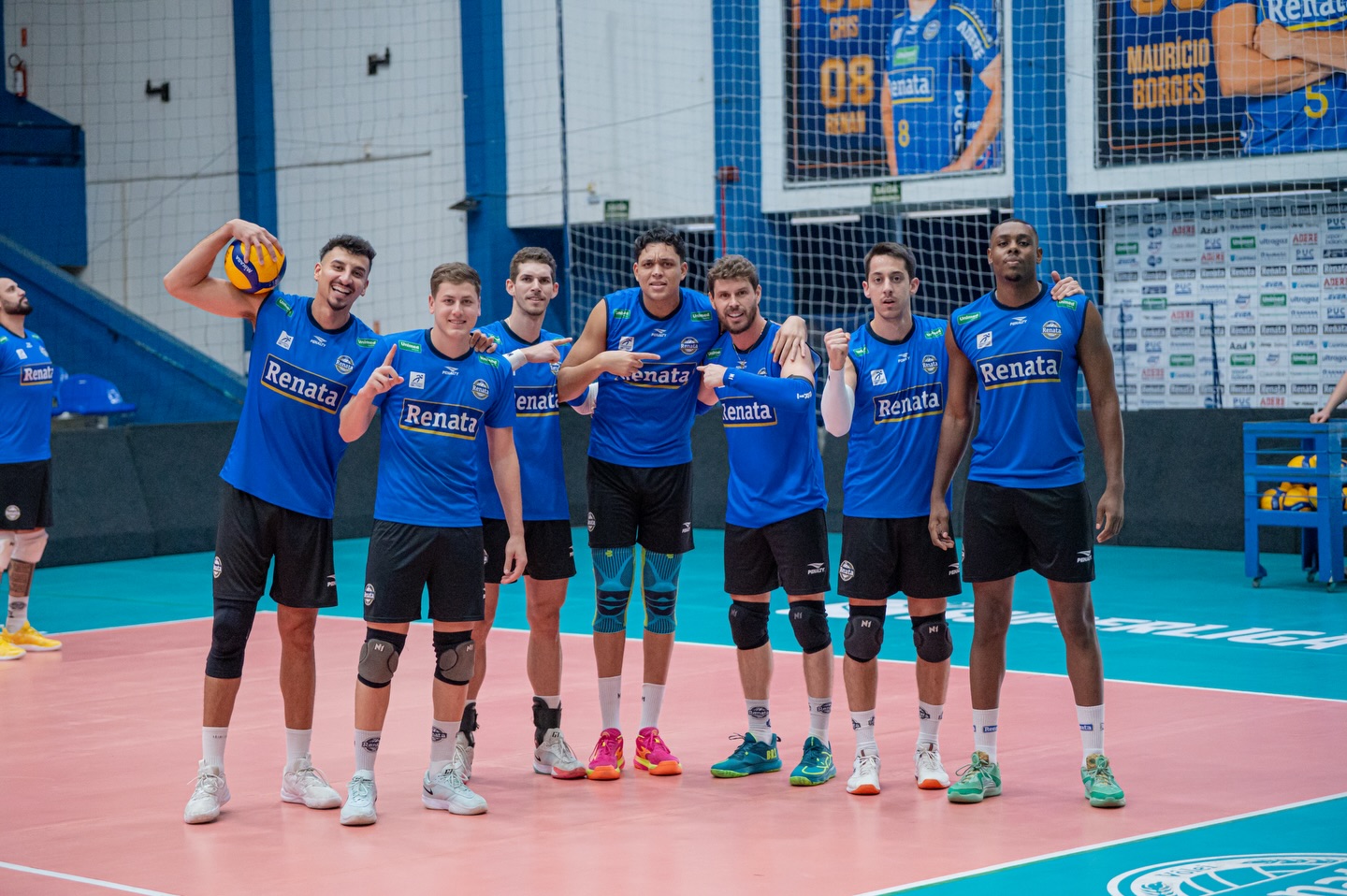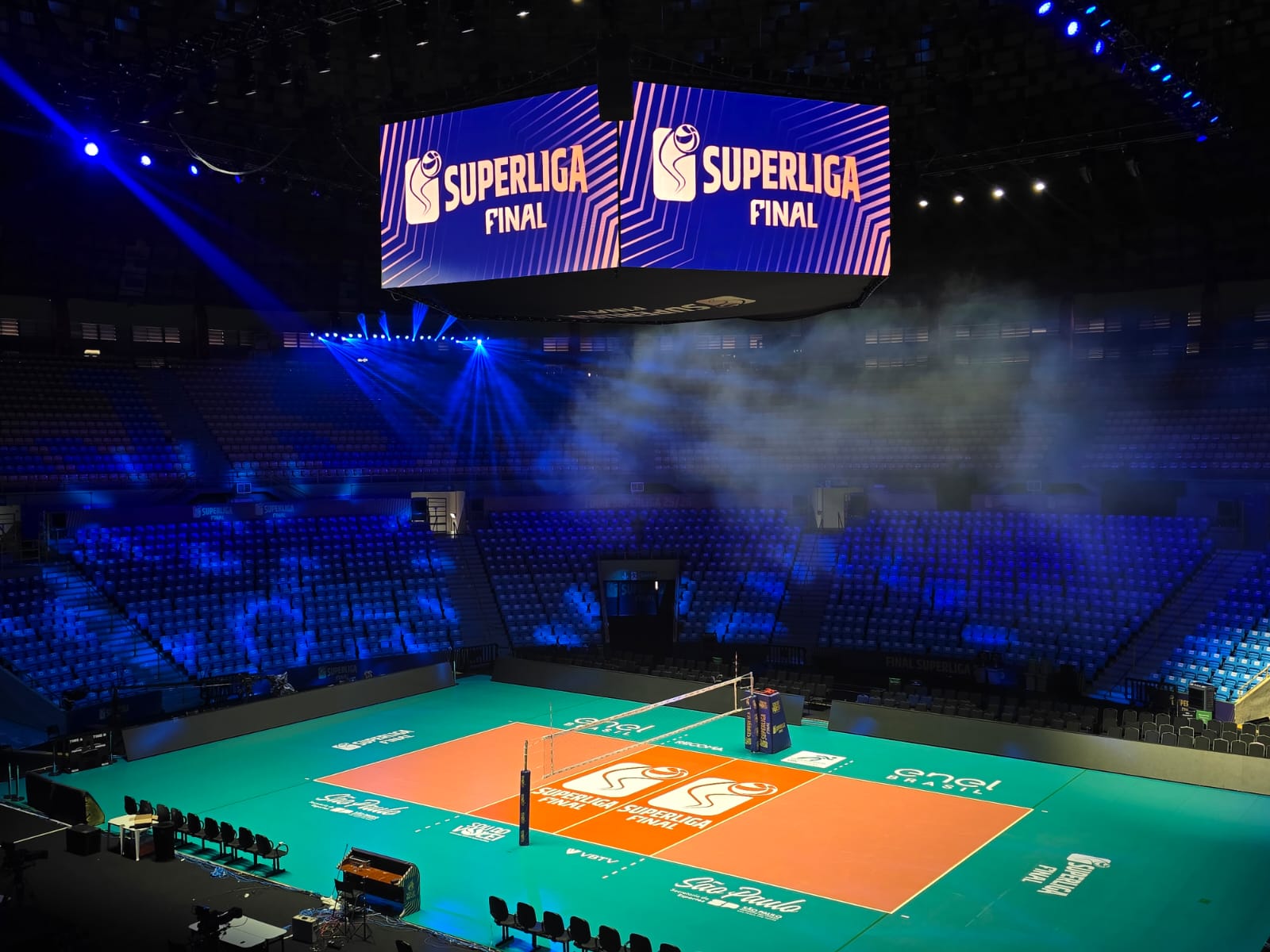
This Sunday (10), the Superliga Masculina final 2025/26 in men’s volleyball doesn’t just pit two elite teams against each other. It stages a collision of histories. Sada Cruzeiro and Vôlei Renata arrive at the Ginásio do Ibirapuera with a prize on the table, yes. But the real weight sits inside the memories.
Because the starting point of this story is Douglas Souza and Maurício Borges, Olympic champions in 2016, now wing spikers on opposing sides. And if you want the long-form angle on how Brazil’s volleyball voice is shaping up for this kind of night, that’s been the throughline in our coverage—per Jogo Hoje—all season. The final feels like a scene pulled straight from the same movie reel, just with different jerseys.
The reunion scene: former room-mates now trading blows for a trophy
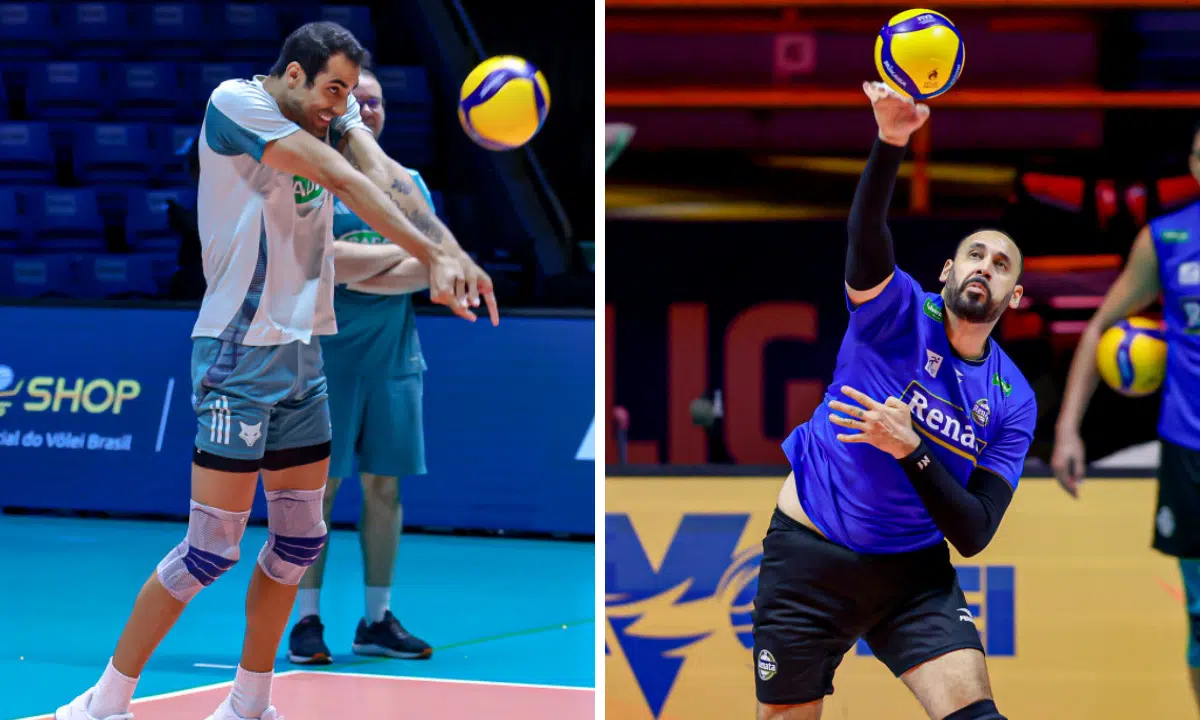
Let’s set the stage properly. The final da Superliga is here, and it’s Douglas Souza, 30, wearing the Sada Cruzeiro colors, facing Maurício Borges, 37, representing Vôlei Renata. Same positions, same competitive DNA, different uniforms. That’s the cold, clean tactical headline.
But the emotional headline is messier, and more interesting. These two weren’t just companheiros de quarto in the selection camp. They shared day-to-day routines, the kind that turns strangers into a unit. In Tokyo-2021, they were roommates again during the ciclo olímpico, and when the world went quiet under pandemic restrictions, Douglas’ and Maurício’s behind-the-scenes moments leaked into the public sphere like lightning—raw, funny, human. Now, fast-forward ten years, and the same bond is reloaded as rivalidade esportiva in a national title match.
That’s why the final da Superliga is more than a game. It’s a reunion where nobody is allowed to be sentimental for too long. You smile, you remember, and then you serve. You block, you defend, you earn the point. Because finals don’t care about nostalgia—only about execution.
The weight of 2016 and the line that connects to Tokyo-2021
Ten years ago, the ouro olímpico in Rio-2016 was the kind of achievement that rewrites a generation’s credibility. Douglas and Maurício were part of that Brazil story, and even if their roles evolved over the years, the shared experience never evaporated. It’s the kind of legacy that shows up in how you handle pressure: the way your shoulders settle, the way your eyes don’t blink when the set tightens.
And in Tokyo-2021, they were together again, close enough to hear the other’s habits at night and close enough to share the strange quiet of a Games without public noise. That’s where the viral clips came from—Douglas acting like the chaos gremlin of the room, Maurício filming and laughing at the scenes unfolding around him. It was friendship with a pulse.
Now the pulse becomes a contest. Different decade, same stakes. Different scoreboard, same feeling: you’re carrying the expectations of a country that loves volleyball, and you’re trying to add another chapter to the ciclo olímpico that started long before the current season.
What Douglas Souza said about Maurício and about the final
Douglas Souza didn’t sound like a man reading a script. He sounded like a man stepping into a memory that refused to fade. In an interview with Olimpíada Todo Dia (OTD), he spoke with real emotion about the chance to face Maurício again in a final da Superliga.
“Borges is an incredible guy. I think he’s very driven,” Douglas said. He recalled how, back in 2021, he was “doing crazy stuff” in the room while Maurício recorded and laughed in the background. Not just admiration—affection.
Then he shifted to the competitive lens, because that’s where a veteran wing spiker lives. Douglas pointed to Maurício’s craft and completeness: the reliability in passing, the steady serve, the smart attack, and the way Maurício times his exits off the block. “He’s a complete player,” Douglas added, and you can feel the respect in the way he describes the details.
Douglas also talked about the Olympic flashback—how the thought of “ten years” hit him like a punch. He remembered the Maracanãzinho as if it were yesterday, even telling the story like he still has a clip somewhere on his phone. That’s the kind of memory that turns a final into a personal mission. “It’s very emotional,” he said, and you believe him.
Maurício Borges’ view: experience, behind-the-scenes, and genuine care
Maurício Borges matched the tone, but with more calm—like a man who’s lived through enough seasons to know how quickly a final can swing. He framed the reunion around the shared decade since the ouro olímpico, and he didn’t hide the happiness of facing a former roommate again.
“It’s nice to remember these ten years of the Olympic gold,” Maurício said. “And I’m happy to have shared not only the court—he was also a room-mate.” Then he made his wish clear for Sunday: he wants the win. Not as a slogan, but as a consequence of preparation.
He also talked about the little mechanics of camp life. He described how Douglas would ask him to do things in the room, and how Maurício would help while Douglas’ off-court personality exploded online. He even referenced the Tokyo-2021 period directly, when they shared a room and the videos went viral during isolation. Friendship, but also discipline—because even those moments were built on trust.
On the tactical side, Maurício leaned into the veteran role. He sees it as part of his job to share experience with the younger players—on the court and off it, even in the “chiqueirinho” where the bench battles from. That’s maturity. That’s leadership. That’s how a 37-year-old turns history into fuel instead of weight.
The decision context: Cruzeiro, Renata, and the season’s storyline between them
Here’s the part that makes fans raise their eyebrows. In the season leading into Sunday, Vôlei Renata didn’t just get the better of Sada Cruzeiro. The season narrative was one-sided: Sada Cruzeiro lost all matches against Renata.
So you’d expect the undercurrent in the stands to be one question: can Cruzeiro change the story in a single match? Can Douglas and his group flip the script when the pressure is highest and the margin for error is the thinnest?
Douglas answered it the way a finalist has to: finals are different. “A final is a final,” he said, insisting each match tells its own story. He even used a reminder from the women’s game—how a team can dominate a campaign and still get hit in the final dynamic. That’s the point. In a final da Superliga, trends don’t vanish, but they don’t decide the match. The rallies do.
So the storyline becomes delicious: two Olympic champions, two different locker rooms, one trophy, and a venue that will amplify every serve, every ponteiros swing, every block touch at the Ginásio do Ibirapuera. This is where rivalidade esportiva stops being a headline and starts being lived.
What’s at stake beyond the title
Sure, the championship matters. But the real stakes are layered. For Douglas, there’s pride—because facing Maurício is like looking at a mirror from a decade ago. For Maurício, there’s legacy—because the veteran who shared the room now wants to finish the story with a trophy as a protagonist.
And for Brazilian volleyball itself, this final is a reminder that the sport’s best chapters are built by continuity. The same generation that delivered the ouro olímpico learned how to win, learned how to handle noise, learned how to carry a nation’s expectations. Now, ten years later, they’re still here—still playing, still competing, still making younger athletes feel what it means to work.
That’s why this match won’t feel like a regular decision. It feels like a handoff. Like the past stepping into the spotlight one more time, not to be celebrated for nostalgia, but to prove it still has bite.
O Veredito Jogo Hoje
Our take is simple: this isn’t just a final between Sada Cruzeiro and Vôlei Renata. It’s a final between two versions of the same character—two ponteiros shaped by the ouro olímpico and refined through a full ciclo olímpico. And when Douglas and Maurício line up as rivals, the companheiros de quarto story turns into a weapon: one team will play with memory, the other with experience. In our book, the side that keeps the rallies clean under pressure wins the day at the Ginásio do Ibirapuera, because in finals, heart is real—but technique is the referee.
Signed: Cronista Épico, JogoHoje.esp.br.
Perguntas Frequentes
When will the Superliga final between Sada Cruzeiro and Vôlei Renata take place?
The final da Superliga 2025/26 is scheduled for Sunday (10).
Did Douglas Souza and Maurício Borges play together in which Olympic Games?
They shared the Olympic journey in Rio-2016 and also stayed connected during the Tokyo-2021 Olympic cycle, including time together as companheiros de quarto.
Why does this final have historical weight for Brazilian volleyball?
Because it reunites two ouro olímpico champions from Rio-2016 as direct rivals, turning the bond of former teammates into a rivalidade esportiva on a national stage—at a venue like the Ginásio do Ibirapuera, with a decade of legacy hanging in the air.