Jogo Hoje has been tracking the F1 2026 development race closely, and the Alpine decision at the Miami GP is a classic case of “test, learn, adjust” done with engineering intent. In a package that arrived in Florida with real hardware, Alpine dropped the unusual inverted-opening rear wing concept and returned to a more conventional DRS-like approach.
The headline sounds like a U-turn, but the details read like process. The 2026 regulamento técnico de 2026 opened room for creative aero solutions, and Alpine leaned into that freedom early. Yet after the first phase of running, the team judged the trade-offs and reverted to a format closer to the familiar DRS behavior—because performance isn’t only about peak downforce, it’s also about stability, mechanism efficiency, and managing arrasto aerodinâmico.
What Alpine changed on the rear wing
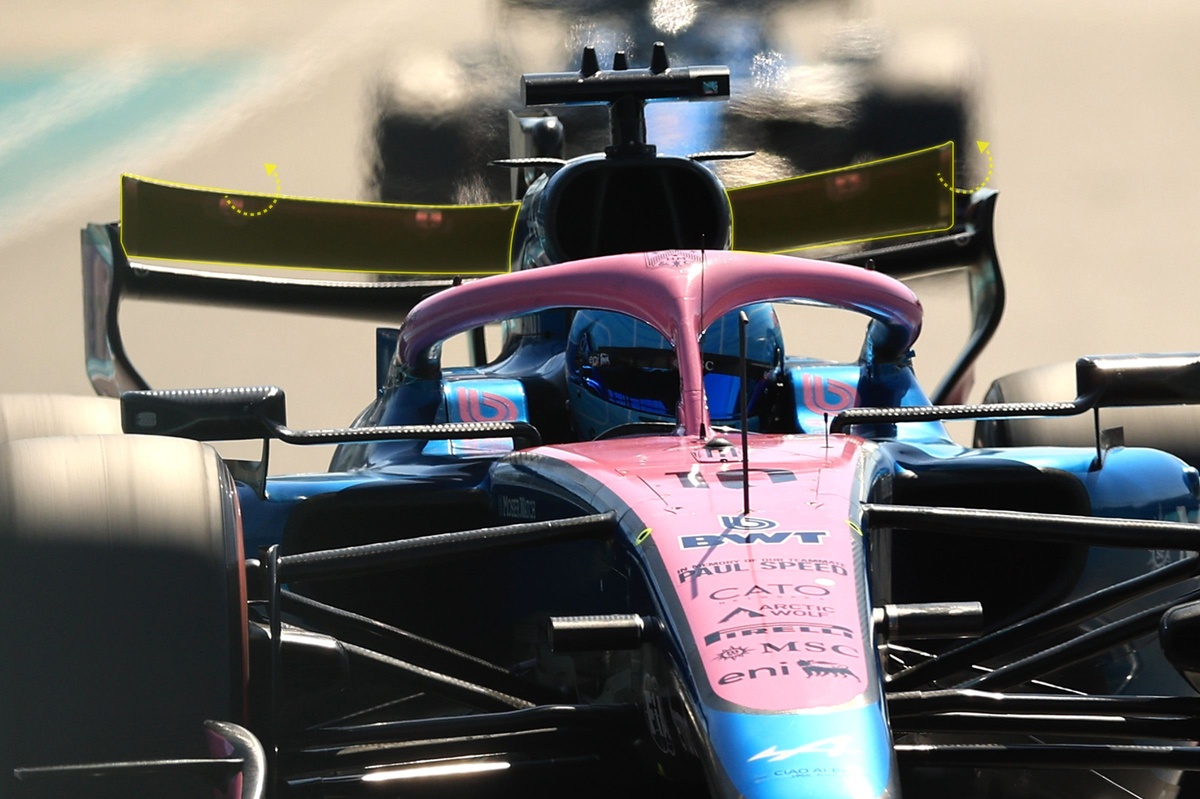
In Miami, the new asa traseira ativa moved away from the inverted-opening geometry that had turned heads earlier in the cycle. The core idea in the initial concept was that the flap móvel folded downward until it sat near horizontal. That design relied on the extra flexibility the regulamento técnico de 2026 allowed, especially around how the flap can rotate and how it behaves during deployment.
After three stages, Alpine made the pivot: the flap no longer rotates in that near-leading-edge, “inverted” style. Instead, in the Miami specification, the flap is pulled up—with the front portion rising above the endplates area—so the opening resembles an older-generation DRS motion more than the previously showcased concept.
Crucially, Alpine didn’t “just” change the flap position. They had to re-engineer the surrounding parts to make the mechanism sweep work cleanly and repeatably.
Why the inverted solution was abandoned
Let’s be blunt: inverted mechanisms can be sexy on paper, but they can also be a headache in the real world—where friction, clearances, and unintended flow interactions show up fast. Alpine’s early inverted design exploited the new regulation freedoms, but the feedback loop didn’t justify keeping it as the main direction.
The timeline tells the story. Alpine’s inverted concept was originally expected to debut with the later window—the GP of Canada was the planned introduction point. Then the schedule disruption from the cancellations in Bahrain and Saudi Arabia effectively created an extra development gap. Alpine used that time to accelerate production and get at least one unit ready for the Miami GP.
So the “recua” wasn’t random. It looks like a deliberate correction after the early running phase, with Alpine deciding that a more conventional opening path would deliver a better balance between deployment behavior and aerodynamic efficiency—especially when the team is already juggling a heavy 2026 focus while still trying to score meaningful points in 2025.
What was altered in the actuator, endplates and flap
The Miami wing revision came with specific mechanical and aerodynamic knock-ons. With the flap now lifting upward rather than folding down, Alpine had to create space for the rotation path. That meant recutting and reshaping the atuador so the mechanism wouldn’t foul the surrounding structures during deployment.
On top of the actuator geometry, the endplates and the flap itself were updated to match the new kinematics. When you change the rotation direction, you’re not just moving parts—you’re changing how the flow sees the trailing-edge system throughout the opening sequence.
Even in the finer details, the team revisited the actuator’s rear section. Where a small aerodynamic profile had appeared earlier in Japan, the component was reworked again for Miami. That kind of iterative refinement is exactly what you’d expect from a team trying to reduce arrasto aerodinâmico penalties while keeping the downforce curve usable across different speed bands and corners.
How the Miami package fits the 2026 project
Alpine’s decision makes more sense when you zoom out to the bigger picture. The 2026 regulamento técnico de 2026 has given teams more room to play with movable surfaces, but that doesn’t mean every creative solution is worth scaling. Alpine clearly chose to treat 2025 as a learning platform while preserving resources for 2026.
There’s also the weight and chassis context. Alpine’s car was already close to the minimum weight early in the season, and that matters when you’re adding and revising hardware mid-year. It signals Enstone’s broader commitment: sacrifice some short-term margins if it helps the 2026 architecture come together faster.
And yes, it’s notable that the new wing unit was limited to one example in Miami. That’s development reality: you don’t always have the production capacity to outfit both cars with the latest configuration immediately, especially when you’re still ironing out the full system integration.
Gasly, Colapinto and the component split
Miami wasn’t just a wing story; it was also a driver and logistics story. Alpine sent the updated rear wing to Pierre Gasly, while Franco Colapinto had to run with the earlier specification.
The reason is straightforward but telling: Alpine managed to ship only one unit, and it arrived at the track late—mounted directly in Florida after arriving on Wednesday morning. With two more weeks available after that, the team could build up stock and plan a second unit for the next opportunity.
Colapinto’s race still benefited from other changes in the package, including a lighter chassis and additional work around the front end and rear suspension zone. On top of that, he delivered a strong result in Miami: seventh place, the best finish of his F1 career at the time.
What Steve Nielsen said about the progress
Steve Nielsen, Alpine’s general director, framed the update in the language of process and expectation management. He essentially confirmed that the team’s direction is producing the results they were chasing, while also stressing the limits of evaluation in a single session when you’re running a multi-variable upgrade slate.
He also pointed out the obvious reality of the pecking order: competitors—particularly those already ahead—have brought heavy update loads too. In his view, Alpine’s package still represents progress, and additional parts are planned for Montreal, with the program continuing as a constant through the year.
O Veredito Jogo Hoje
Alpine didn’t “panic revert” for optics—they corrected the concept because the inverted deployment clearly wasn’t earning its keep once the real-world variables hit. The most telling detail is that they could only ship one new asa traseira ativa to Miami, which screams prioritization, not comfort. If you’re building toward the 2026 regulamento técnico de 2026, you can’t afford a mechanism that looks clever but costs you consistency, space, and arrasto aerodinâmico. This is a smart reset, and frankly it’s the kind of engineering discipline that wins seasons—even when the scoreboard in 2025 isn’t perfect. Assinado: Jogo Hoje, pela análise tática que coloca a pista antes da pose.
Perguntas Frequentes
Why did Alpine abandon the inverted rear-wing concept?
After early development running across the initial stages, Alpine judged that the inverted-opening approach wasn’t delivering the best overall balance. The team reverted to a more conventional DRS-like motion to improve deployment behavior, integration, and the aerodynamic trade-offs under the 2026 regulamento técnico de 2026 allowances.
What changed in Alpine’s rear wing in Miami?
In Miami, the updated asa traseira ativa switched from a flap that folded downward to a setup where the flap móvel is pulled upward, resembling an older DRS opening. That required changes to the atuador geometry and the endplates, including space for the new rotation path.
Did Gasly and Colapinto use the same rear-wing specification?
No. Alpine brought only one new wing unit for Miami, mounted on Pierre Gasly. Franco Colapinto ran with the previous version in the race.